At M. Tucker & Sons, we’re working to keep valuable materials in use and reduce the amount of waste sent to landfill through a practical circular economy approach.
Debris and earth materials collected during gutter cleaning, drain maintenance, vacuum loading and other civil and environmental works are transported to our EPA-licensed waste facility in Mount Evelyn, Victoria. Rather than treating these materials simply as waste, suitable material can be processed, recycled and given a new purpose, including use in the production of concrete.
This approach helps create a more connected cycle between waste collection, resource recovery and construction — turning materials that may otherwise have been discarded, into a useful resource.
From waste collection to resource recovery
M. Tucker & Sons has invested in the infrastructure required to receive, separate and recycle waste material generated through municipal road, drainage and stormwater maintenance. Our existing waste facility accepts material including stormwater drain waste, gross pollutant trap waste, NDD waste, roadside drain waste and drilling waste.
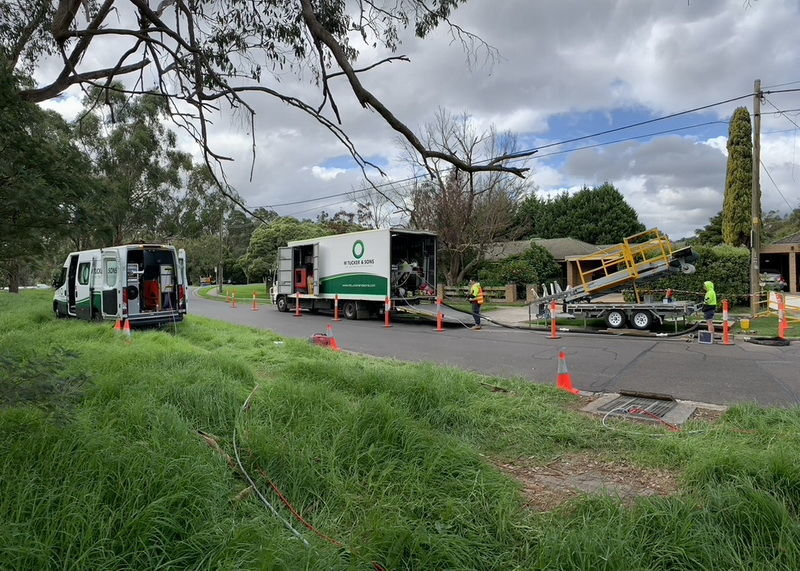
The process begins in the field, where debris, soil and other materials are collected from gutters, drains and infrastructure projects using specialised equipment such as vacuum trucks. The material is then transported to our Mount Evelyn facility for assessment, separation and processing.
Where suitable, recovered material can be incorporated back into productive uses rather than relying solely on virgin resources.
That is circular economy thinking in practice: keeping materials in circulation for longer and reducing unnecessary waste.
A circular waste facility for Melbourne businesses and councils
Our facility does not only process material generated by M. Tucker & Sons.
Other organisations, including contractors such as Yarra Ranges Council, Maroondah City Council, Harmor Services, along with other Shires & Councils and waste providers, deposit suitable waste materials at our Mount Evelyn facility for assessment and processing.
By bringing material from multiple infrastructure and maintenance activities into one recovery process, we can help keep more resources in productive use and reduce reliance on the traditional take, make and dispose model.
This reflects the broader direction of Victoria’s circular economy strategy, which is focused on reducing waste, increasing recycling and reuse, and making better use of existing resources.
Closing the loop with recycled concrete
One of the most valuable opportunities created through resource recovery is the ability to return suitable recycled material to the construction cycle.
M. Tucker & Sons combines its environmental services, waste processing capabilities and concrete operations to help create a more circular materials pathway — collecting waste, recovering useful material and turning suitable resources into concrete rather than allowing them to become an end-of-life product.
This supports a broader industry movement towards reducing the environmental impact of construction materials. Low carbon concrete is increasingly being used across residential, commercial, civil and infrastructure projects as the construction sector looks for ways to reduce embodied carbon while maintaining required engineering performance.
Why the Circular Economy Matters in Construction
Construction and infrastructure require enormous volumes of raw materials, while maintenance, demolition and civil works also generate substantial waste streams. Circular economy principles aim to reduce this impact by keeping resources and materials in use for as long as possible.
For M. Tucker & Sons, this means connecting services that traditionally operate separately — waste collection, waste processing and concrete production — to create opportunities for material recovery.
The benefits include:
Diverting suitable materials away from landfill
Recovering value from waste generated during civil and drainage works
Reducing demand for virgin resources where recycled alternatives are suitable
Supporting more responsible construction and infrastructure practices
Creating a local material recovery pathway through our Mount Evelyn facility
RMIT research into building materials in a circular economy similarly examines how construction material supply chains can reduce, reuse, recycle and recover resources while reducing dependence on virgin material.
The Future of Circular Construction
Circularity is becoming an increasingly important consideration across Australia’s construction and infrastructure sectors.
The 2026 Melbourne Build Sustainability Summit includes a dedicated Demystifying the Circular Economy in Construction panel examining practical applications such as material reuse, adaptability and material recovery, as well as the barriers preventing broader adoption.
For M. Tucker & Sons, circularity is not simply an industry concept. Our waste collection, EPA-licensed recycling facility and concrete capabilities provide a practical opportunity to recover materials locally and return them to productive use.
Circular Economy at M. Tucker & Sons
From collecting material in Melbourne’s streets and drainage networks to processing recovered resources at our Mount Evelyn facility, M. Tucker & Sons is working to create a more responsible approach to waste and construction materials.
To learn more about our waste disposal, recycling or concrete capabilities, contact the M. Tucker & Sons team.



 To secure an obligation free quote simply pick up the phone and call the M. Tucker & Sons team today on